The Essences and Qi of Plants
A Sensory Approach to Chinese Herbal Medicine & the Classical Foundations of the Shen Nong Ben Cao
Enroll Here— Limited Spaces —
A Rare Opportunity to Reconnect with the Living Tradition
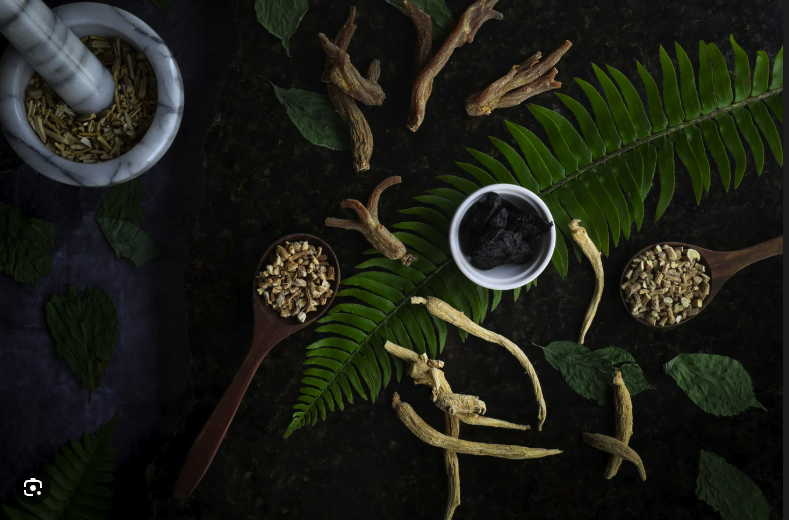
Historically, physicians understood plants through direct encounter — through taste, smell, texture, and the felt movement of Qi within the body. These sensory experiences formed the foundation of how the Chinese materia medica was originally understood and transmitted.
Many practitioners recognize a gap in their training: the ability to truly perceive herbs rather than relying primarily on memorized lists of actions and indications. This course addresses that gap not through further intellectual study alone, but through direct, embodied engagement with the herbs themselves.
This seminar brings together two complementary approaches: direct sensory engagement with medicinal plants and a deeper exploration of the classical foundations of the Chinese materia medica — through the lens of the Shen Nong Ben Cao Jing.
Enroll Here
Learning Through Direct Encounter
Throughout the weekend, herbs will be cooked and prepared in class. Participants will actively taste, smell, and handle medicinal substances as part of the learning process.
Taste & Temperature
Taste herbs to directly understand flavor, temperature, and physiological response within the body.
Plant Morphology
Examine how different parts of a plant — root, bark, leaf, seed, and flower — express distinct therapeutic affinities.
Visual Literacy
Develop the ability to read plant texture, structure, and morphology as indicators of medicinal function.
Olfactory Exploration
Refine sensory perception through deep olfactory engagement, deepening sensitivity to herbal energetics.
Cooking & Preparation
Cook and prepare herbs together, allowing participants to smell, taste, and handle medicinals throughout.
Clinical Intuition
This sensory immersion strengthens clinical intuition, diagnostic sensitivity, and long-term recall.
The Shen Nong Ben Cao Jing
The course also explores the alchemical and cultivation roots of the Chinese materia medica tradition through the Shen Nong Ben Cao, including the ancient practice of using plants for spiritual cultivation and yang sheng 養生 — nourishing life.
We will examine the Shen Nong Ben Cao Jing and its classical three-tier classification of herbs as a framework for understanding what medicine is for and what healers are called to do.
Upper Grade
Prescribed not primarily for illness but for the cultivation of life itself — supporting vitality, nourishing the spirit, sustaining health over time.
Middle Grade
Herbs that regulate and tonify, restoring balance to a system that has drifted from its natural course.
Lower Grade
Herbs that act directly on pathology, expelling or transforming what has caused harm to the patient.
This framework applies to the acupuncturist and the herbalist alike — because it is not fundamentally about substances. It is about clinical orientation.
How much toward cultivating life?
Practitioners who engage seriously with this perspective often find that it reshapes how they approach every case: how they take a history, what they prioritize in treatment, how they communicate with patients, and how they measure progress.
What This Seminar Offers
Whether you are a seasoned practitioner refreshing your herbal foundations or a newer clinician seeking a more intuitive, embodied relationship with the materia medica — this seminar meets you where you are.
- Direct sensory engagement with medicinal plants — taste, smell, texture, and thermal nature as felt in the body
- Classical three-tier classification of the Shen Nong Ben Cao and its clinical implications
- Exploration of plant morphology — how different plant parts express distinct therapeutic affinities
- Alchemical and spiritual roots of the Chinese materia medica tradition
- Yang sheng 養生 — the ancient practice of using plants for nourishing life and spiritual cultivation
- Cooking and preparation of herbs in class throughout the weekend
- Olfactory and visual literacy as gateways to understanding herbal energetics
- Clinical orientation reframed — from disease elimination toward life cultivation
Enroll Now
Join Us in Barcelona
Barcelona, Spain
Hotel HCC Regente
Rambla de Catalunya, 76
Eixample, 08008
Barcelona, Spain
9:00 – 17:00 daily · Limited Enrollment
From Practitioners Who Have Studied with Evan
"Thank you Evan, I've learned more in 4 days than a 4 year degree. The course was very well structured and a great balance between theory and practice. I would definitely recommend this to anyone who wants to go to the next level in their practice. Very Grateful."— Natia, Albuquerque
"Evan's classes are clear and inspiring. He creates a great learning atmosphere that keeps everyone engaged and easy to understand. As the Huandi Neijiang says: 'To teach is to illuminate the way.'"— Niuniu Hongyu Wang
"Evans' explanation of pathophysiology through a discussion about the inter-relationship of 'nature' and 'location' is 24k gold. Brilliant and profound content, humbly delivered, with clarity. Most grateful."— Joseph Novosel
"Learning Chinese medicine with Evan has been nothing less than profound and ripe with the depth and richness inherent in both the philosophy and practice of Chinese medicine. If you are looking to deepen your knowledge and love of Chinese medicine, I highly recommend this program."— Bart Beckerman
"Evan has a way of making herbs come alive. When I learned from Evan I never felt like it was just about memorizing functions and characteristics. It was about getting to know these plants as friends and family in a way that was relational, embodied, and heart-centered. I've found that what I have learned from Evan, I've incorporated into my life in a deeper and also more practical way than other herbal classes I've done. His teachings are suffused with a clarity and confidence that is contagious."— Hannah Dwertman
"Evan Rabinowitz is one of those rare teachers who can bring incredibly dense subject matter to life. His teaching style is extremely organized and richly textured. I appreciated how skillfully he designed a curriculum rooted in the classics, yet applicable to the modern clinic. While I learned practical applications of herbs and formulas, Evan also taught me to cultivate my ability to observe resonance and nuances in prescribing. He taught us to think in terms of the energetics of herbs and formulas rather than just the mechanics of them. I am so grateful for my herbal studies with Evan, it has truly deepened my understanding and love of Chinese Medicine as a whole."— Becky Thoroughgood
Watch Evan Teach
About Evan Rabinowitz, D.Ac.
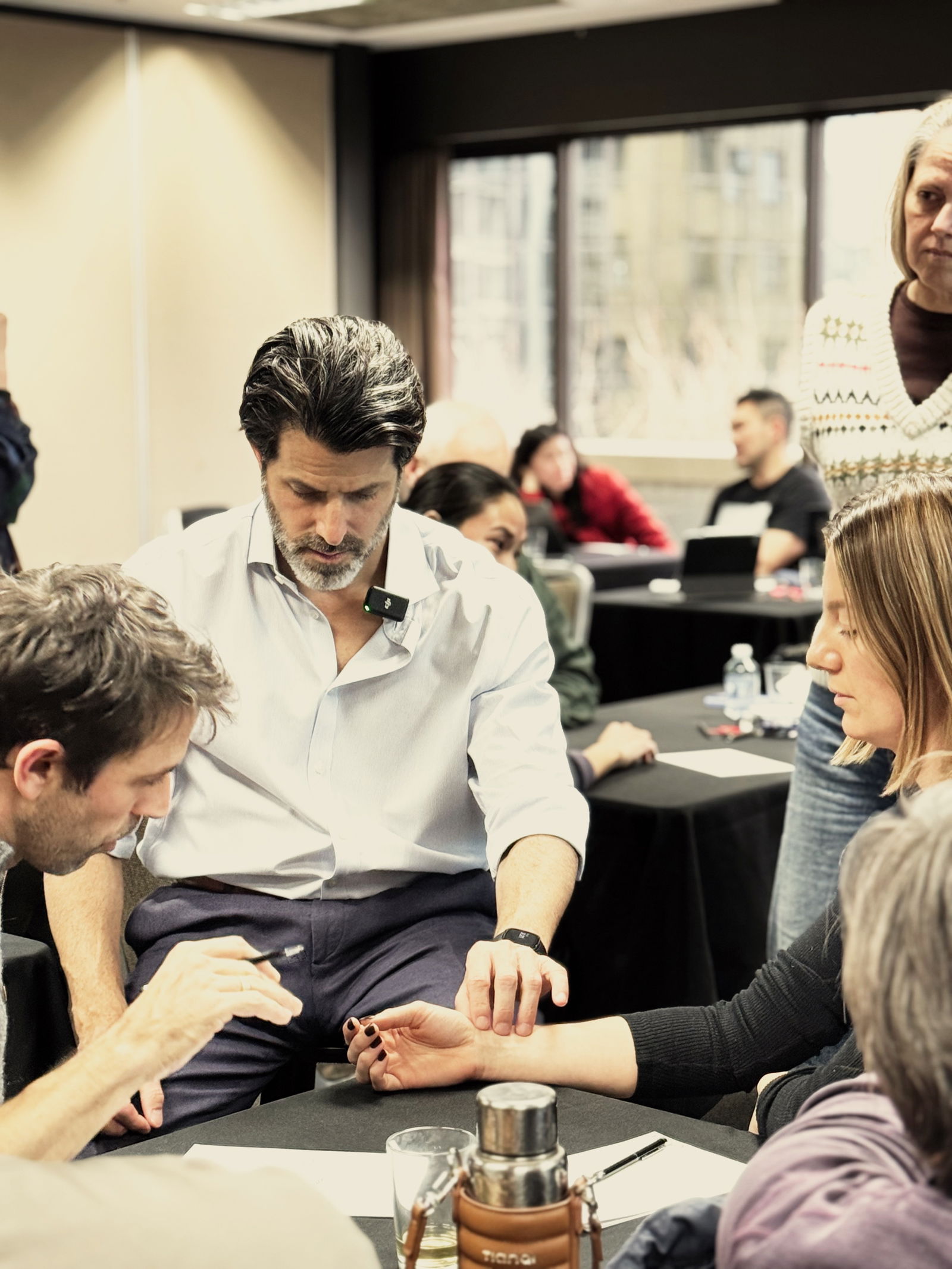
Evan Rabinowitz is an herbalist, educator, and founder of the Yao Shan Center for Chinese Medicine in Washington, DC, where he has maintained a clinical practice for more than 25 years. His work is rooted in the conviction that deeply studying herbal medicine is essential to fully understand classical Chinese medicine.
Trained intensively with Jeffrey Yuen, Evan received comprehensive instruction in classical herbal medicine, channel systems (sinew, luo, divergent, eight extraordinary vessels), and specialty disciplines including gynecology, pediatrics, oncology, gastroenterology, and external medicine.
Early exposure to the classical formula tradition—combined with deep and extensive study with Jeffrey Yuen—profoundly shaped his clinical reasoning. From this training, he developed a clear and methodical way of thinking: formulas are not merely prescriptions, but expressions of physiology and intention. They convey the spirit and strategy of treatment. Formulas are teachers.
As director of Herbal Medicine at Maryland University of Integrative Health, a university focused mainly on acupuncture, Evan gained expertise in training students and experienced acupuncturists in herbal medicine. His career has, in part, been devoted to building a clear, workable bridge—helping acupuncturists step more fully into herbal medicine without abandoning the clinical strengths that define their practice. Evan's herbal course broadens the scope of what acupuncturists can treat, making their diagnostic thinking more structured, nuanced, and deliberate. That expanded capacity does not remain confined to herbal prescriptions; it returns to the treatment room, sharpening their use of acupuncture and strengthening their overall clinical judgment.
A defining feature of his teaching is the integration of herbs with acupuncture channel systems: Luo vessels, Sinew Channels, Divergent Channels, Eight Extraordinary Vessels, and classical physiology. This approach provides a natural pathway for acupuncturists to expand into formula construction and herbal therapeutics.
Evan's education has been deliberately eclectic, allowing him to view clinical reality through multiple lenses. He teaches students how to understand formula matching in the classical tradition, how to modify established prescriptions, and how to construct formulas from scratch for a unique patient at a unique moment. Pulse and tongue diagnosis remain central in this process. Flexibility, discernment, and clinical responsiveness define his method.
Over two decades of teaching—currently at Georgetown University School of Medicine, Washington DC, Daoist Traditions College of Medical Arts, NC and privately throughout the US, and internationally—Evan designed and directed multi-year herbal training programs that bridged Five-Element frameworks, Neijing channel theory, classical formula traditions, and specialty practice. In the current Yao Shan Herb Program he refined this structure around the physiology of substances—Qi, Blood, Fluids, Jing, and Shen—creating a comprehensive system that trains practitioners to think broadly yet precisely.
Evan's teaching is known for his clear, structured, and deeply classical approach. His goal is to cultivate herbalists who can move fluidly between traditions, apply herbs to channel systems with confidence, and construct formulas with technical precision and clinical insight.
Questions & Answers
Join Us in Barcelona
This Summer
Spaces are strictly limited by the hands-on format of this course.
We would be pleased to have you join us for this rare opportunity.
♦ Limited Enrollment · In Person Only · June 12–14, 2026 ♦
In Partnership with Premier Chinese Medicine Supplier
PLANETA VERD